What Every Reiki Level 1 Course Must Cover
- (And Why Getting This Right Matters More Than You Think)

If you're preparing to teach your first Reiki Level 1 class — or you've been teaching for a while and want to sense-check your curriculum — this post is for you.
Over the years, I've welcomed many students into my practice who had completed Reiki Level 1 elsewhere. And time and again, the same pattern emerged: they had been trained, they had a certificate, but they were missing things. Important things. Things that form the absolute foundation of safe, ethical, effective Reiki practice.
The problem wasn't always the teachers. Often it was the materials — or the absence of a clear, structured curriculum to follow.
This post sets out exactly what every Reiki Level 1 course should cover, based on the curriculum framework I used throughout my years of teaching accredited courses through the UK Reiki Federation and CNHC.
WHY CURRICULUM STANDARDS MATTER IN REIKI
Reiki is not a regulated therapy in the UK in the same way that, say, physiotherapy is. This means that technically, anyone can call themselves a Reiki teacher and begin delivering courses.
That freedom is also a responsibility.
When a student completes your Level 1 course, they may go on to practise on family members, friends, or eventually clients. They may use your course as the foundation for their Level 2 training and beyond. The information you give them — or fail to give them — follows them throughout their entire Reiki journey.

Teaching from an accredited curriculum framework, such as the one set out by the UK Reiki Federation, is not about bureaucracy. It is about ensuring that the next generation of Reiki practitioners and teachers is built on solid, accurate, complete foundations.
THE 12 ESSENTIAL TOPICS FOR A REIKI LEVEL 1 COURSE
Based on the UK Reiki Federation curriculum framework, here is what every Reiki Level 1 course must cover:
1. THE HISTORY OF REIKI
Students need to understand where Reiki comes from — Mikao Usui's
story, the development of the system, and how it was brought to the
West. Also, the influences through the lineages. This isn't just
background: it gives context to the practice and helps students
understand its integrity.
2. THE REIKI PRINCIPLES (GOKAI)
The five Reiki principles are central to the practice. Students should
know them, understand their meaning, and begin to work with them in
daily life. A course that skips or skims over the principles is missing the
heart of Reiki.
3. THE REIKI LINEAGE
Your students should know their lineage — the line of teachers from
Usui through to you. This is part of the tradition and integrity of Reiki
practice. The importance of face-to-face attunements is integral to the
foundations of Reiki.
4. HOW REIKI WORKS
Students need a grounded, accurate explanation of what Reiki energy
is, how it flows, and what a Reiki session involves — both for
themselves and when working with others. Gain understanding of the
difference between Reiki and other CAM therapies.
5. THE CHAKRA SYSTEM
A foundational understanding of the chakra energy system — what
chakras are, where they are located, and how they relate to Reiki
practice. The chakra system wasn’t originally included within the
foundational knowledge of Usui and Japanese style of Reiki, however it
is useful in relation to linking to different aspects of the physicality and
energetic bodies.
6. THE HAND POSITIONS
Both self-healing hand positions and positions for treating others.
Students should leave Level 1 knowing how to give themselves a full
Reiki self-treatment and understanding the basic framework for
treating another person.
7. THE REIKI ATTUNEMENT
Students should understand what the attunement is, what to expect
during it, and how it works energetically. It can ignite many different
experiences within each individual and is ongoing through the 21- or
30-day healing process as they embody it.
8. THE 21 or 30 DAY CLEARING PROCESS
Following attunements, many students experience a clearing or
integration process. Preparing students for this — and supporting
them through it — is a crucial part of responsible Reiki teaching.
9. SELF-HEALING PRACTICE
Level 1 is fundamentally about self-healing. Students should leave with
a clear, practical self-healing routine they can begin immediately and
maintain daily. Encouragement to complete self-healing journals as a
learning tool and part of their own unique informed practice.
10. ETHICS AND PROFESSIONAL RESPONSIBILITY
Even at Level 1, students need to understand the ethical framework
around Reiki — including when and how to work with others safely,
what to say and what not to say, and how to act with integrity as an
emerging practitioner.
11. CONTRAINDICATIONS AND SAFETY
When should Reiki not be given? Who should be referred elsewhere?
What are the boundaries of Reiki as a complementary therapy? These
are non-negotiable. Although as R1 students they won’t be working
with clients, it is still good foundational knowledge to work within
ethical boundaries.
12. STUDENT ASSESSMENT AND RESOURCES
Students should leave with clear learning materials, opportunities to
reflect on what they've covered, and guidance on their next steps —
including how to practise, who to practise on, and how to progress to
Level 2.
WHAT HAPPENS WHEN THESE TOPICS ARE MISSED?
I've seen it first-hand. Students who have completed a Level 1 course and don't know what lineage is. Students who were never taught the 30-day clearing process (Usui Shiki Ryoho) and were left confused and unsupported after their attunement. Students who had never been given proper guidance on self-healing hand positions.
This is not rare. It is one of the main reasons Blueray Creatives exists.
When these foundational topics are missing from a Level 1 course, students carry those gaps with them. If they go on to Level 2 — and many do — those gaps become embedded. If they eventually become teachers themselves, those gaps get passed on.
Getting Level 1 right is not just about your students. It is about the integrity of Reiki practice as a whole.
HOW TO MAKE SURE YOUR COURSE COVERS EVERYTHING
If you're looking for ready-made, fully structured teaching materials that already cover every one of the topics above, our Reiki Level 1 Manual and Workbook Bundle is written, structured and formatted — ready to edit in Canva with your name, lineage and branding.
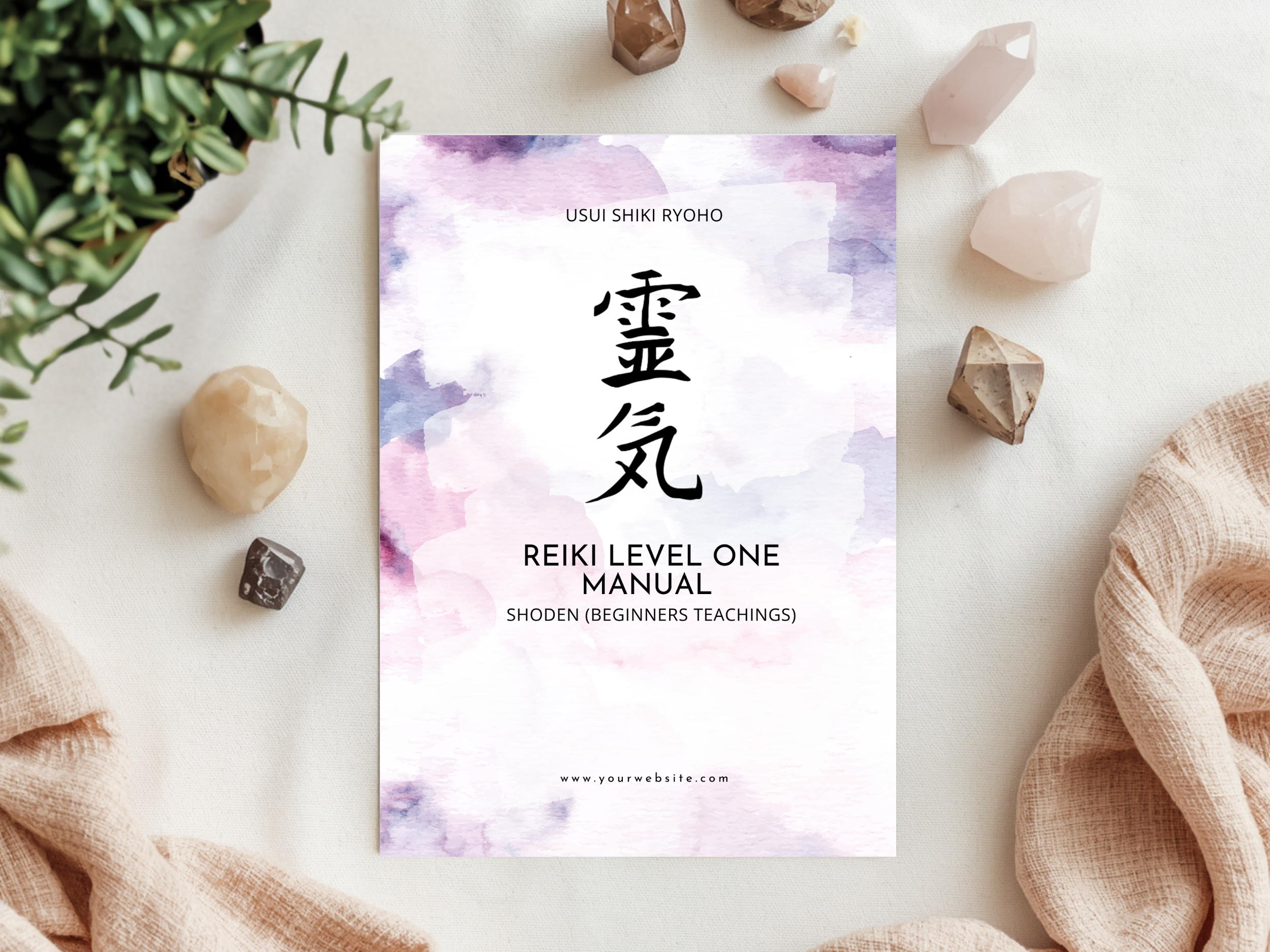
Browse Reiki Level 1 Teaching Materials
FINAL THOUGHT
Teaching Reiki is one of the most meaningful things you can do as a Master Teacher. Your students are trusting you with their foundation in this practice. They deserve complete, accurate, structured teaching — and so do you.
If you have questions about curriculum, course structure, or anything covered in this post, feel free to get in touch. We're always happy to help.
Ready to take the next step in your Reiki journey?
Moving from practitioner to business owner can feel overwhelming, but you don't have to navigate it alone. I’ve put together a Free PDF Guide to help you move past the "self-belief" blocks and get the practical foundations of your practice right from the start.
Join our community of heart-centered practitioners
About the author Ann Singleton, Reiki Master Teacher. UK Reiki Federation, CNHC accredited, with over ten years of teaching experience. Explore Ann's guided meditations at Blueray Diamond Healing.